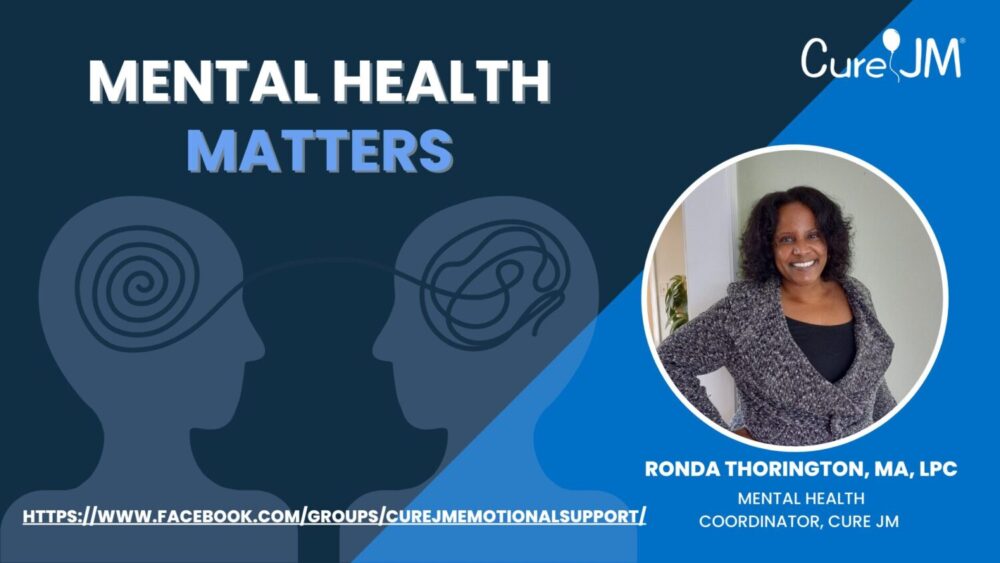

By Ronda Thorington, MA, LCP
Summary:
In rare disease caregiving, loneliness often hides in plain sight between appointments, responsibilities, and the need to stay strong. This month, we name it and explore gentle ways caregivers can feel less alone.
There are many themes that play on repeat when caring for a child with Juvenile Myositis: frustration, fear, anger, grief, uncertainty. But one challenge often sits quietly in the background, unseen and unspoken: loneliness.
In this Rare Disease Life, loneliness can be especially hard to name. As caregivers, we spend so much time focused on our child’s needs that we lose sight of our own. We manage flares, medications, school accommodations, insurance appeals, and the constant vigilance that JM requires. Fire after fire. When things finally slow down, we may realize that while we are surrounded by people who care, very few truly understand what this life is like.
Loneliness in rare disease is not about being physically alone. It is about carrying experiences that do not translate easily into everyday conversation. It is about not having the energy to try to make others understand. Many caregivers recall moments of picking up the phone or considering a get-together, only to change their mind, exhausted by the thought of explaining everything happening behind the scenes. This kind of loneliness is about holding chronic worry, invisible grief, and ongoing responsibility while the rest of the world moves forward. Even in moments of support, caregivers can still feel profoundly unseen.
Loneliness is a natural response to sustained stress. It does not mean you are doing something wrong. In fact, it can reflect how much emotional energy you are conserving for what matters most.
While loneliness may not disappear completely, it can be softened. Small, intentional steps can help protect caregiver mental health and reduce isolation:
- Name loneliness without judgment. Simply acknowledging “I feel lonely” creates space for compassion and support.
- Seek understanding, not fixing. You may not need advice as much as you need to be heard. Choose people and spaces that allow you to speak freely.
- Connect with Cure JM Connect Groups. These groups offer caregivers a space to share, listen, and connect with others who understand the realities of JM. You do not have to talk if you are not ready. Being present still matters.
- Schedule emotional care. Just as you schedule medical appointments, plan small moments of connection that support your mental health.
- Find one place to exhale. Whether it is a support group, a trusted friend, or a therapist, loneliness grows when we feel we must always be strong.
- Practice self-compassion. Replace self-criticism with kindness. Of course this feels hard. This is hard.
Caregiver mental health matters, because you matter. Not later. Not when things settle down. Now. In this Rare Disease Life, connection is not a luxury. It is essential. Through shared spaces like Cure JM Connect Groups, honest conversations, and meaningful connection, we remind one another that no caregiver has to walk this journey alone.
March 2026