Sixteen years ago, when my daughter was diagnosed with a rare autoimmune disease, I knew I was scared. I knew I was overwhelmed. I knew I was stressed. What I didn’t know was that I was also grieving.
How could I? No one had died. My daughter was still very much here: funny, loving, stubborn, and my heart’s joy. Grief wasn’t a word I would have used to describe what I was feeling.
But even though no one had died, things had been lost.
I lost the childhood I had imagined for her. I lost the parent I thought I would be. I lost the ease I once took for granted, a life where every fever didn’t make me wonder what was coming next, and where medications, appointments, labs, infusions, and medical decisions didn’t live rent-free in my head.
I think that is something we don’t talk about enough in rare disease.
We often talk about being strong, resilient, and capable. As caregivers, we become advocates, researchers, and medication managers. We become All Things, because we have no choice. But what about the rest?
I was doing everything that needed to be done for my daughter and my family, but for a long time I didn’t recognize that some of what I was carrying was grief. I thought grief was reserved only for death. I didn’t understand that I could deeply love and be grateful for the child in front of me and also mourn the life I had imagined for her, and for us as a family.
Grief tied to a loss without closure or a clear ending is called ambiguous grief. For rare disease families, those losses can include careers, finances, relationships, independence, and the lives we envisioned for ourselves and our children.
And with this grief, the hits just keep on comin’.
Your child misses another activity. A flare interrupts a season that had finally begun to feel “normal.” You watch other children reach milestones your child hasn’t reached yet or may never reach. Or maybe things are going wonderfully, and suddenly you remember how much work it took just to get here.
Grief is “both-and,” not “either-or.” We can be profoundly grateful for our children and still grieve what illness has taken from them and from us.
So, what do we do with that grief? Here are several strategies that have helped me and that I encourage other caregivers to consider:
- Name it. There is power in recognizing that you are grieving.
- Practice acceptance. Acceptance doesn’t mean liking what has happened. It means acknowledging what is true today, and sometimes accepting the uncertainty of it all.
- Find your village. We were never meant to carry all of this alone.
- Make room for joy. Don’t let grief erase joy. Both can exist in the same space.
- Find meaning. As Nietzsche wrote, “He who has a why to live can bear almost any how.”
That last one has been especially important for me. I would never have chosen this Rare Disease Life for my daughter or our family. But over the years, I have learned that acknowledging what we lost doesn’t diminish everything we have gained, or the beautiful person my daughter has become.
I’ve also learned that strength isn’t pretending to be okay. Sometimes strength is simply giving myself permission to say, “This is hard. This hurts. And I am grieving what can’t be changed.”
And maybe that is where healing begins.
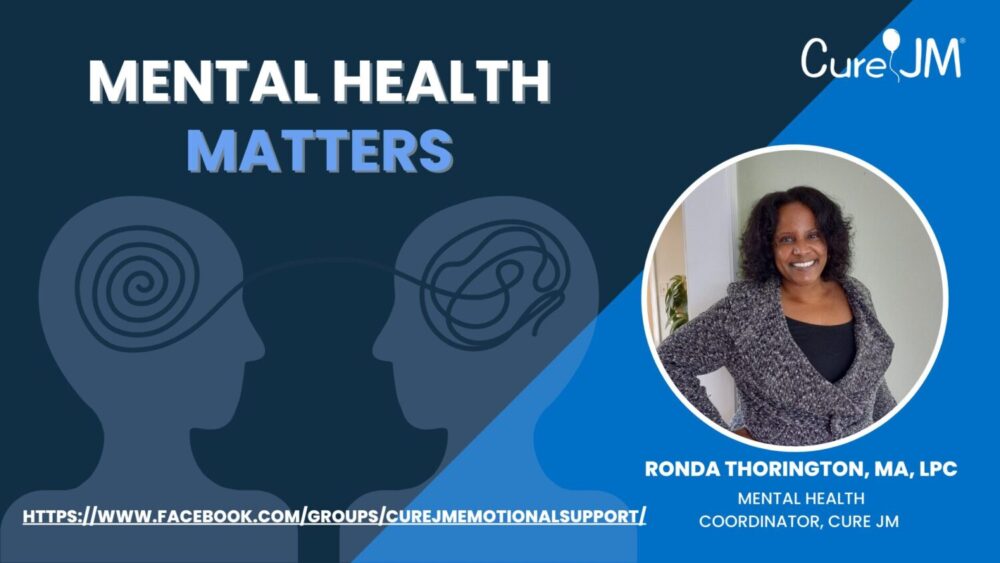
By: Ronda Thorington, MA, LPC
October 2026