A Parent's Guide to
Appealing a JAK Inhibitor Denial for JM
Many families are surprised and frustrated when insurance denies a treatment that their doctor has prescribed to treat their child’s JM. Unfortunately, this is common, especially because these medications are often prescribed “off label” for rare diseases, even when there is strong medical evidence and expert support.
The good news: denials can often be overturned.
The bad news: it often takes a few weeks of paperwork, which can be frustrating and confusing.
This guide is designed to help families understand the process, stay organized, and advocate effectively for their child.
Learn more about JAK inhibitors here.
Other treatments that commonly require several appeals are IVIG or biologics, such as abatacept (Orencia), rituximab, anifrolumab (Saphnelo), and others.
Step 1: Do Not Panic About the First Denial
An initial denial does not mean the medication is unavailable or inappropriate for your child.
In rare diseases like JM, insurers commonly deny:
- Newer medications
- Off-label treatments
- High-cost medications
- Treatments without FDA approval specifically for JDM
Many JAK inhibitors used in JDM are supported by:
- Published research
- Expert physician experience
- Consensus among pediatric rheumatologists
A denial is often the beginning of the approval process, not the end.
Step 2: Read the Denial Letter Carefully
Ask for the denial in writing if you do not already have it.
Look for the exact reason for denial. Common reasons include:
- “Experimental” or “investigational”
- “Not medically necessary”
- “Off-label use”
- “Step therapy required”
- “Insufficient documentation”
- “Must fail other medications first”
This wording matters because it helps determine the best appeal strategy.
Step 3: Contact Your Child’s Rheumatology Team Immediately
Your medical team is your strongest partner.
Ask:
- Has the clinic handled JAK appeals before?
- Who coordinates insurance appeals?
- Will the physician complete a peer-to-peer review?
- What supporting documents can be submitted?
Step 4: Request a “Letter of Medical Necessity”
This is one of the most important pieces of the appeal.
The physician letter should explain:
- Your child’s diagnosis and disease severity
- Previous medications tried and failed
- Side effects or risks of current therapies
- Why a JAK inhibitor is medically necessary
- Why delaying treatment could cause harm
- Published evidence supporting JAK inhibitors in JDM
Helpful details may include:
- Muscle weakness
- Skin disease severity
- Lung involvement
- Calcinosis
- Steroid toxicity
- Failure of methotrexate, IVIG, rituximab, or other therapies
Step 5: Include Published Research
Insurance companies respond better when appeals include medical literature.
Most rheumatologists have a letter on hand that they use for JAK approvals for a variety of conditions, including JIA or JM. Ask your doctor if they can provide:
- Published studies
- Consensus statements
- Clinical trial information
- Case series
- Pediatric rheumatology guidelines
Research on JAK inhibitors in juvenile myositis has expanded significantly in recent years, and many pediatric rheumatologists now use them in difficult or refractory cases.
Examples of JAK inhibitors sometimes used in JDM include:
- Tofacitinib (Xeljanz)
- Baricitinib (Olumiant)
- Upadacitinib (Rinvoq)
View our Guide to JAK inhibitors here.
Step 6: Ask for a “Peer-to-Peer Review”
A peer-to-peer review allows your child’s doctor to speak directly with the insurance company’s reviewing physician.
This can be extremely important in rare diseases like JM.
During the call, the physician may explain:
- Why standard therapies failed
- Why the medication is urgent
- Why the treatment is consistent with current expert practice
- Why delaying care could worsen long-term outcomes
Many approvals happen after peer-to-peer review.
Step 7: Submit a Formal Internal Appeal
Most insurers require at least one formal internal appeal before outside review. Oftentimes the doctor will complete this. You can find out from your care team who is submitting this.
Your appeal packet may include:
- Denial letter
- Letter of medical necessity
- Clinic notes
- Lab results
- MRI or biopsy findings
- Photos of rash or calcinosis
- Research articles
- Personal family letter
Keep copies of everything.
Create a simple folder with:
- Dates
- Names of representatives
- Call reference numbers
- Fax confirmations
- Uploaded documents
Organization matters.
Step 8: Write a Parent Letter
Your voice matters.
A short personal letter can help explain:
- How the disease affects daily life
- School limitations
- Pain or fatigue
- Emotional impact
- Medication side effects
- Why your physician believes this treatment is necessary
Keep the tone factual, calm, and specific.
Example:
“Our child has continued to worsen despite standard therapies. Our rheumatology team believes a JAK inhibitor is medically necessary to control disease activity and reduce long-term damage. Delaying treatment risks further muscle loss, disability, and complications.”
Step 9: Request an Expedited Appeal if Appropriate
If your child is rapidly worsening, ask whether the appeal qualifies as “urgent” or “expedited.”
Examples may include:
- Progressive weakness
- Lung disease
- Severe ulcerations
- Calcinosis
- Hospitalization
- Major functional decline
- Other complications
Expedited reviews may occur within days instead of weeks.
⎯⎯⎯⎯⎯⎯⎯⎯⎯⎯⎯⎯⎯⎯⎯⎯⎯⎯⎯⎯⎯⎯⎯⎯⎯⎯⎯⎯⎯⎯⎯⎯⎯⎯⎯⎯⎯⎯⎯⎯⎯⎯
Step 10: If Denied Again, Request an External Review (IMR)
If the insurer upholds the denial, families may be eligible for:
- Independent Medical Review (IMR)
- External review
- State insurance review
In many states:
- External reviewers are independent physicians
- Their decision is binding on the insurer
- Rare disease expertise may carry significant weight
Deadlines matter. Some states require filing within 30 to 120 days after denial.
Other Things to Consider
Reach out to your Hospital Social Worker. Social workers can help identify financial assistance programs, navigate insurance challenges, and connect you with resources that may reduce the cost of care.
Consider contacting your insurance company and requesting a case manager. A case manager can help you understand your benefits, navigate approvals, and coordinate care.
Reach out to the drug manufacturer. Many pharmaceutical companies offer patient assistance or copay support programs that can help reduce costs.
- Contact XELSOURCE (Pfizer’s support program). Ask if they can help with prior authorizations, appeals, copay programs, patient assistance or no-cost drug programs, temporary bridge supplies while appeals are pending.
- If you have commercial/private insurance, Pfizer has a copay savings card that may reduce costs substantially, sometimes close to $0 depending on coverage.
- If uninsured or underinsured. Pfizer’s Patient Assistance Program may provide Xeljanz at no cost for eligible patients. This assistance requires patients to live in the U.S. and is subject to income limits (often based on % of federal poverty level).
- Ask about “Interim Care” or bridge medication. If insurance approval is delayed, XELSOURCE sometimes provides temporary medication coverage while appeals are ongoing.
This can be very important for JM families during lengthy appeal processes.
Tips That Help Families Most
Stay organized
Keep a notebook or spreadsheet with:
- Dates
- Calls
- Names
- Reference numbers
- Next steps
Be polite but persistent
Many JDM medication approvals happen after multiple appeals.
Use the clinic’s expertise
Large pediatric rheumatology centers often have experienced appeal coordinators.
Ask about manufacturer support programs
Some pharmaceutical companies offer:
- Copay assistance
- Temporary bridge medication
- Patient support programs
Keep communication professional
Firm and persistent works better than angry. Remember, the employee you speak to is likely not responsible for the denial, but they may be able to help you if you stay calm.
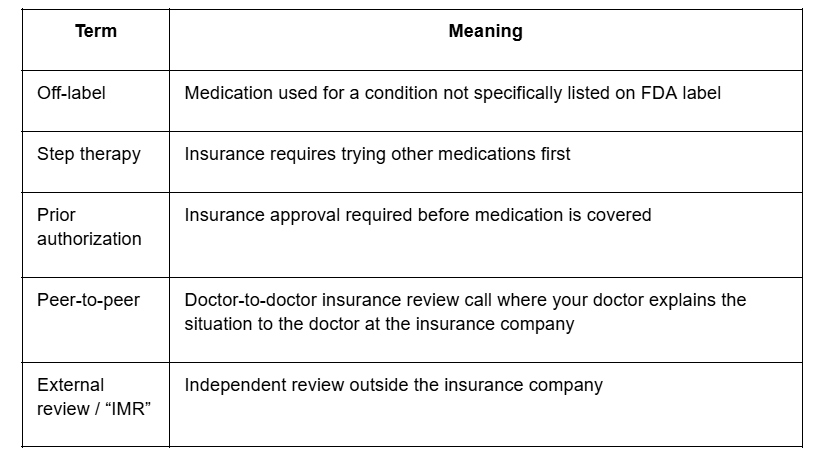
Common Words You May Hear
Final Encouragement
Families dealing with JM are often forced to become advocates very quickly. Insurance appeals can feel exhausting, especially while caring for a sick child.
Many children with JM have ultimately gained access to JAK inhibitors after appeals, peer-to-peer reviews, and external review processes. Persistence, strong physician support, and organized documentation can make a real difference.
Work closely with your child’s rheumatology team and do not be discouraged by an initial denial.
You are not alone.
For more help contact info@curejm.org or visit our Cure JM Connect support group.